


How to Display Art Prints Without Frames: 7 Methods
TL;DR:
- Displaying art prints without frames can be achieved using various removable methods that protect both the artwork and walls. Techniques like magnetic rails and leaning displays offer stylish, damage-free options ideal for renters and collectors. Proper application and archival materials are essential for maintaining print quality and preventing irreversible damage over time.
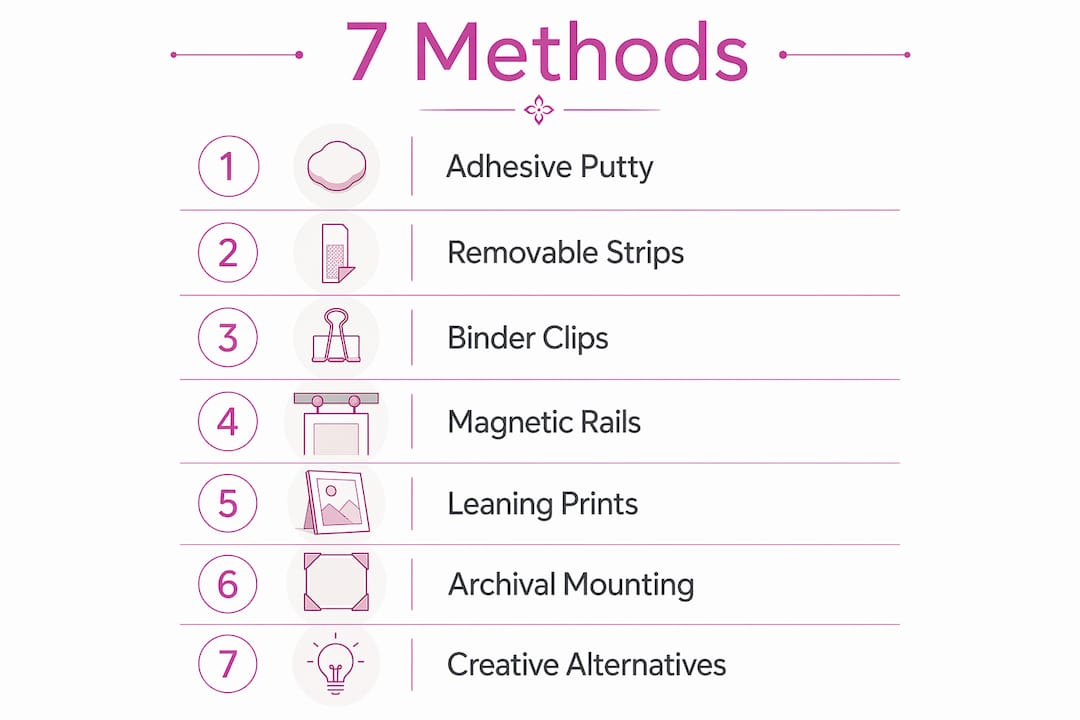
Displaying art prints without frames means using adhesive putty, removable strips, binder clips, magnetic hangers, or lean displays to mount and showcase prints without traditional framing. These unframed display methods, sometimes called frameless art mounting, cost a fraction of custom framing and give you the flexibility to rotate your collection whenever you want. Renters especially benefit because most techniques leave walls intact. This guide covers every practical method, from poster putty to floor leaning, with preservation tips so your prints stay in perfect condition.
How to display art prints without frames: tools you need first
The right materials determine whether your display looks intentional or accidental. Choosing the wrong adhesive for your wall type is the single most common mistake, and it causes both print damage and wall repairs.
| Tool | Best for | Weight limit |
|---|---|---|
| Poster putty | Lightweight prints on smooth walls | Under 1 lb |
| 3M Command strips | Prints up to 24" x 36" | Up to 15 lb with four pairs |
| Binder clips + tacks | Renter-safe swappable displays | Light to medium prints |
| Magnetic hanger rails | Archival, damage-free display | Light to medium prints |
| Archival photo corners | Mounting boards and pinboards | Light prints only |
Before buying anything, identify your wall surface. Smooth painted drywall accepts most adhesives cleanly. Textured walls, wallpaper, and freshly painted surfaces (under 28 days old) are risky for any adhesive product. 3M Command strips hold up to 15 lb with four pairs and remove cleanly without wall damage, but only on smooth surfaces. That weight capacity covers most standard art prints comfortably.
- Poster putty: Reusable, repositionable, and inexpensive. Works on paper prints but can leave oil stains on thin or uncoated paper over time.
- Museum putty: Non-toxic and removable, museum putty is safest on sealed surfaces after patch testing. Better choice than standard poster putty for anything with collector value.
- Binder clips: Attach at the top edge of a print and hang from a small tack or nail. Designer Caryn Grossman recommends this binder clip method specifically for renter-safe display because it never pierces the print itself.
- Magnetic hanger rails: Two thin magnetic bars sandwich the top edge of a print. No adhesive touches the paper at all, making these ideal for limited-edition or archival prints.
- Washi tape and decorative tape: Works for casual displays and adds a graphic border effect, but avoid on valuable prints since tape adhesive can transfer.
Pro Tip: Always buy one extra set of Command strips or one extra roll of putty. Running out mid-installation causes uneven pressure and crooked hangs.
Step-by-step methods for hanging prints on walls
Clean surfaces and careful application separate a professional-looking display from one that falls off at 2 a.m. Follow these steps for each major method.
Poster putty and museum putty
- Clean the wall area with a dry microfiber cloth to remove dust and grease.
- Clean the back corners of the print with a soft eraser to remove any paper debris.
- Roll four pea-sized balls of putty and press one into each corner of the print’s back.
- Press the print firmly against the wall for 30 seconds, applying even pressure across all four corners.
- Test on the wall first in a hidden spot before committing, especially on painted or wallpapered surfaces.
- To remove, peel from one corner slowly at a 45-degree angle rather than pulling straight off the wall.
Poster putty is best for temporary displays of lightweight, low-value prints. For anything you plan to keep up for more than a few months, move to Command strips or magnetic hangers.
Removable adhesive strips (3M Command)
- Wipe the wall with isopropyl alcohol and let it dry completely for one hour.
- Press the two halves of each strip together until they click.
- Attach strips to the back of the print at the top two corners and, for larger prints, the center of the top edge.
- Press the print against the wall for 30 seconds with firm, even pressure.
- Wait one hour before letting go. The adhesive needs time to bond fully.
- To remove, pull the tab straight down slowly. Never yank sideways.
Pro Tip: For prints wider than 18 inches, add a strip at the bottom two corners as well. Bottom strips prevent the print from bowing outward at the center, which is the most common cause of an uneven hang.
Binder clip and tack system
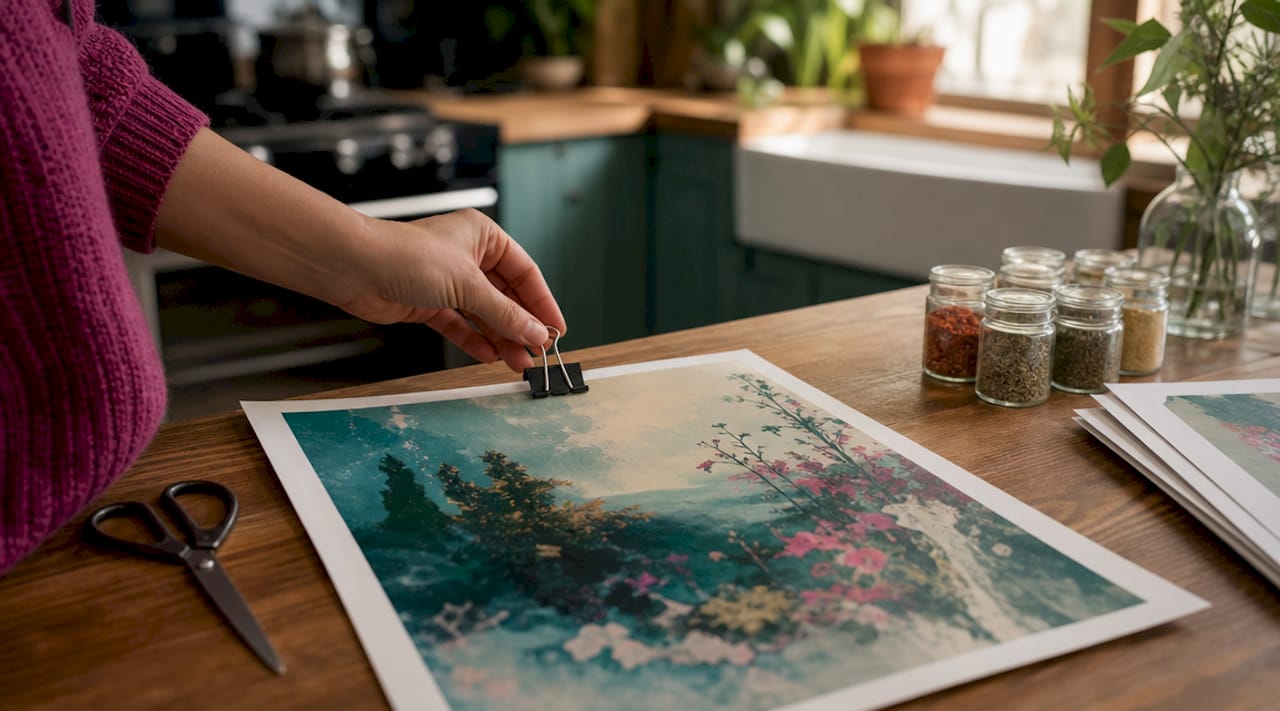
This method works especially well for paper prints you want to swap frequently. Clip a medium binder clip to the top center of the print, then hang the clip’s metal loop over a small finishing nail or pushpin. The print never gets pierced, and swapping takes under 10 seconds. For a gallery-style row, use a horizontal picture rail or a wooden dowel hung by two nails, then clip multiple prints along its length. The best approach for repeatable, low-damage print swapping is to keep the mounting hardware fixed and only change the print itself.
Magnetic hanger rails
Magnetic rails consist of two slim bars, usually wood or metal, that clamp the top edge of a print between them using embedded magnets. Hang the top bar from a single nail or adhesive hook, then slide the print in from below. These are the most archival-friendly option for hanging prints without frames because no adhesive, tape, or clip ever contacts the print surface. They also create a clean, gallery-like look that suits modern and minimalist interiors well. For creative display ideas that go beyond standard hanging, magnetic rails pair well with layered shelf arrangements.
Creative alternatives to hanging: displaying prints without mounting
Not every print needs to go on a wall. Leaning large prints against walls or placing smaller prints on desks and credenzas is a stylish alternative that causes zero wall damage and takes under a minute to set up.
Floor leaning works best for large-format prints, typically 24 inches wide or larger. The scale reads well from across a room, and the casual angle signals that the display is deliberate rather than unfinished. Lean prints against a wall on a hardwood floor, a low shelf, or a fireplace mantel. Add a small rubber furniture pad under the bottom edge to prevent sliding.
For smaller prints, consider these placement options:
- Desk or work surface: A 5x7 or 8x10 print propped against a stack of books or a small easel creates a focused display without any installation.
- Credenza or console table: Layer two or three prints of different sizes at varying heights. Place the largest print flat against the wall and angle smaller ones in front.
- Bookshelf ledge: Picture ledges and standard bookshelves both work. Overlap prints slightly for a collected, editorial look.
- Easel display: A tabletop or floor easel suits single statement prints. Artist easels from brands like Melissa & Doug (tabletop) or US Art Supply (floor) hold prints securely without any attachment.
Unframed art creates a relaxed, personalized vibe in interiors, often fitting better with casual, layered decor than perfectly framed pieces. This is particularly true for abstract prints, botanical illustrations, and photography, where the paper itself is part of the aesthetic.
Pro Tip: When leaning multiple prints, vary the orientation. Mix one vertical print with one horizontal print to create visual rhythm without needing to measure or level anything.
How to preserve prints when displaying without frames
Preservation is the most overlooked part of frameless display. Adhesives, light exposure, and humidity all affect paper prints over time, and the damage is often irreversible.
The core risks when you display art without frames include:
- Adhesive transfer: Oil-based putties and low-quality tapes leave permanent stains on uncoated paper. Always use archival-grade or museum-quality products on any print with collector value.
- UV exposure: Unglazed prints have no UV protection. Keep them away from direct sunlight and windows with strong afternoon light.
- Humidity: Paper expands and contracts with humidity changes. In bathrooms or kitchens, prints can warp within weeks.
- Improper removal: Pulling adhesive off too fast tears paper fibers. Patch testing adhesive in a hidden area before full application is the single most effective prevention step.
“Designers recommend treating unframed art with the same care for composition as framed art, using subtle attachment methods so swapping is easy and damage minimal.” — House Beautiful
For prints you genuinely value, use a foam core or archival mount board as a backing. Attach the print to the board with archival photo corners (no adhesive on the print itself), then hang or lean the board. This approach gives the print rigidity, protects the back surface, and makes the whole piece easier to handle. Wrapping a styrofoam board in fabric with moulding creates a pinboard for rotating prints without any permanent mounting at all.
Pro Tip: For limited-edition or signed prints, never use any adhesive directly on the paper. Magnetic rails or archival corners on a mount board are the only two methods that leave the print completely untouched.
Key takeaways
The most effective way to display art prints without frames combines the right mounting method for your wall surface with archival-safe materials that protect the print from adhesive damage.
| Point | Details |
|---|---|
| Match method to wall type | Smooth walls suit Command strips; textured or delicate walls need magnetic rails or lean displays. |
| Protect valuable prints | Use magnetic hangers or archival corners on mount boards to keep adhesive off the paper entirely. |
| Patch test every adhesive | Test putty or tape in a hidden spot before full application to prevent wall and print damage. |
| Keep hardware fixed, swap prints | Secure clips or rails permanently and change only the print to minimize wear on both art and walls. |
| Lean displays need no installation | Large prints leaned on floors or shelves create a stylish, zero-damage display in under a minute. |
Why unframed art deserves more credit than it gets
Most people assume unframed art looks unfinished. After working with prints and original paintings at Emansgallery, I have found the opposite is true when the method is intentional.
The prints that generate the most conversation in styled interiors are almost never the ones in heavy frames. They are the ones leaned casually on a credenza, clipped to a wooden dowel, or held by a slim magnetic rail with the paper edge visible. The material quality of the print itself becomes part of the display. For choosing prints suited to unframed display, look for prints on heavier paper stock (200 gsm or above) or canvas, which hold their shape without a frame’s structural support.
Renters and collectors both benefit from frameless methods, but for different reasons. Renters avoid wall damage deposits. Collectors can rotate a larger body of work without buying frames for every piece. The one rule I would apply to both groups: treat the mounting hardware as permanent and the print as temporary. Fix your clips, rails, or adhesive hooks once, then swap prints freely. That single habit protects both your walls and your art. For more on styling prints at home, the principles of composition apply whether the print is framed or not.
— Eman
Discover prints worth displaying at Emansgallery
Emansgallery offers museum-quality canvas prints and wall art by artist Eman Khalifa, all designed to display beautifully with or without traditional frames. Canvas prints in particular suit magnetic rail and lean displays because the material holds its shape without a frame’s structural support. The Private Eye canvas print is a strong example: its bold conceptual composition reads well from a distance, whether hung on a magnetic rail or leaned against a wall on a console table. Browse the full collection at Emansgallery for abstract, geometric, floral, and seascape works that ship worldwide from the UK, USA, Canada, Australia, and beyond.
FAQ
What is the easiest way to hang a print without a frame?
Removable adhesive strips like 3M Command strips are the easiest method for most smooth walls. They hold up to 15 lb with four pairs and remove cleanly without wall damage.
Can poster putty damage my prints or walls?
Poster putty is safe for lightweight prints on smooth walls when tested first, but oil-based putty can stain thin or uncoated paper over time. Museum putty is the safer choice for any print with collector value.
How do I display large art prints without frames?
Lean large prints (24 inches wide or larger) against a wall on a floor, shelf, or mantel with a rubber pad under the bottom edge to prevent sliding. This creates a deliberate, casual display with zero wall damage.
What is the best frameless method for renters?
Binder clips attached to the top edge of a print and hung from a small tack or finishing nail are the most renter-friendly option. The hardware leaves only a small nail hole, and the print itself is never pierced or damaged.
How do I protect a valuable print when displaying it without a frame?
Mount the print on an archival foam core board using archival photo corners, with no adhesive touching the paper. Then hang or lean the board using your preferred method.
Stay Connected
- ✨ Explore Eman Khalifa's original art, fine art prints and art-inspired merchandise.
- Follow Eman Khalifa's art journey on: Instagram @emans_gallery and Facebook
- Watch Eman Khalifa creating live art on: YouTube @emans_gallery
