


Wall Art Display Ideas That Transform Any Room
TL;DR:
- Proper wall art placement is centered at 57 to 60 inches from the floor, matching eye level.
- Using consistent frame spacing and an anchor piece creates cohesive, intentional displays in any room.
The best wall art display ideas combine scale, balance, and creative arrangement to make any room feel intentional and personal. Professional interior designers follow the same core layout standards used by museums worldwide, then layer in creative styles to reflect individual taste. Whether you want a classic gallery wall, a single bold statement piece, or a shelf-based rotating display, the approach starts with a few non-negotiable rules. Get those right, and every creative choice after that lands with confidence.
1. What are the essential rules for hanging wall art?
Artwork placement follows one universal standard: center art at 57–60 inches from the floor. That measurement matches average eye level and is the same benchmark used by museums worldwide. Most people hang art too high, which disconnects it from the furniture below and makes a room feel unanchored.
When placing art above furniture, the vertical gap should be 6–12 inches between the top of the furniture and the bottom of the frame. The artwork’s width should cover roughly two-thirds to three-quarters of the furniture beneath it. For a 60-inch sofa, that means art in the 40–45 inch range.
Spacing between frames in a grouped display matters just as much as height. Consistent frame spacing of 2–4 inches creates a tight, curated cluster, while 6–10 inches gives a relaxed, open feel. Never mix both spacing styles on the same wall. Inconsistency reads as accidental, not artistic.
Common mistakes to avoid:
- Hanging art too high, especially above sofas and beds
- Using art that is too small for the wall or furniture below it
- Mixing frame spacing styles within a single arrangement
- Skipping an anchor piece, which leaves the eye with no resting point
- Ignoring the 57–60 inch center rule when grouping multiple frames
Pro Tip: Before you drill a single hole, learn how to hang wall art using the 57-inch center rule as your baseline. It applies to single pieces, pairs, and full gallery walls equally.
2. Which creative display concepts elevate a home’s style?
Creative wall decor goes far beyond a single framed print. The display format you choose shapes the entire mood of a room. Each style below suits different wall sizes, ceiling heights, and personal aesthetics.
“One large anchor piece, at least 50% larger than surrounding frames, gives the eye a resting point and unifies the composition. Without it, a gallery wall reads as a collection of objects rather than a deliberate design.” — gallery wall design principle
Gallery walls use varied frame sizes around a central anchor piece. The anchor creates visual hierarchy, and surrounding pieces fill in with smaller works, photographs, or prints. This format works on any wall wider than 5 feet.
Symmetrical grids deliver a clean, modern look with minimal planning. Identical frames in equal rows and columns work especially well in hallways, home offices, and dining rooms. Grid arrangements require deliberate size and spacing choices to avoid feeling rigid.
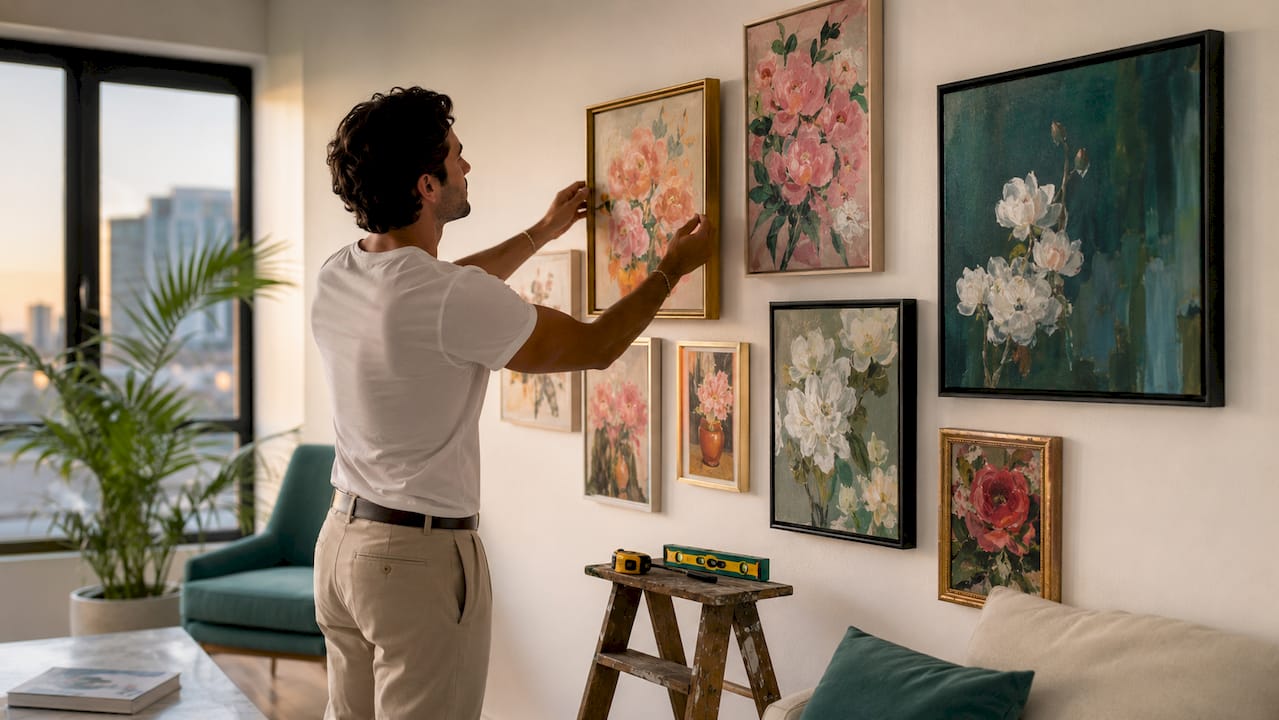
Salon-style floor-to-ceiling displays fill high walls with layered art at multiple heights. This approach suits living rooms with ceilings above 9 feet and creates dramatic visual impact. It requires more planning but rewards patience with a genuinely striking result.
Horizontal rows work well on narrow walls, hallways, and above low furniture like console tables or beds. A single row of three to five frames at consistent height reads as intentional and polished.
Leaning large pieces against a wall or on a mantel creates a casual, layered effect without any hardware. This works best with pieces at least 24 inches wide and gives the display a relaxed, studio-like quality.
Shelf-based displays use picture ledges to hold rotating art. You can swap pieces seasonally without touching the wall, which makes this format ideal for collectors who want variety. Explore African wall art as a culturally rich option for rotating shelf displays.
Maximalist mixed media incorporates sculptures, textiles, mirrors, and plants alongside framed art. This style requires the most planning but produces the most personal result. The key is a unifying color palette or frame finish to hold the composition together.
3. How to plan and arrange your wall art before hanging
Planning on the floor before touching the wall is the single most effective art display tip professionals use. Arranging frames on the floor lets you test grouping, balance, and spacing without committing to a single nail hole. Move pieces around freely until the composition feels right.
Once you have a layout you like, trace each frame onto kraft paper or newspaper and cut out the shapes. Tape these paper templates to the wall using painter’s tape. This method lets you visualize exact placement in the actual space before drilling, which saves both time and wall damage.
Follow these steps for a reliable arrangement process:
- Measure your wall and note any obstacles like outlets, switches, or windows.
- Lay all frames face-down on the floor in the space directly in front of the wall.
- Identify your anchor piece and place it at the center of the floor arrangement.
- Work outward from the anchor, balancing sizes and shapes on both sides.
- Trace each frame onto paper, cut it out, and label it with the frame’s name or photo.
- Tape templates to the wall starting with the anchor at 57–60 inches center height.
- Step back and assess from across the room before marking any nail points.
Pro Tip: Group art by one unifying element, either theme, color palette, or frame finish. Mixing all three without a common thread creates visual noise rather than cohesion. Professional designers coordinate frame finishes to unify diverse artworks in a single installation.
For deeper guidance on layout planning, the gallery wall planning guide from Emansgallery covers step-by-step methods for any room size.
4. What are the best budget and rental-friendly display options?
Renting a home or working with a tight budget does not limit your display options. The most flexible hanging art ideas require no drilling at all. Leaning large art pieces on substantial furniture surfaces works well for pieces at least 24 inches wide and creates a relaxed, layered look that is easy to change.
Practical options for renters and budget-conscious decorators:
- Adhesive strips and removable hooks: Products like Command strips are rated by weight. Always check the weight rating against your frame before hanging. Heavy frames need multiple strips placed at each corner.
- Picture ledges: Shallow shelves mounted once let you rotate art freely without new holes. One ledge installation supports dozens of future arrangements.
- DIY framing: Clip frames, floating frames, and simple wooden frames cost a fraction of custom framing. Pair them with quality prints for a polished result at low cost.
- Layering smaller pieces over larger ones: Lean a large canvas against the wall and prop smaller framed prints in front of it. This creates depth without additional hardware.
- Acrylic frames instead of glass: Acrylic is lighter than glass, reduces glare, and is less likely to damage walls if a hook fails. It also ships more safely for online art purchases.
- The 60% rule: A gallery wall should fill approximately 60% of the wall space above furniture to feel balanced. Filling less than that reads as sparse; more than that can feel crowded.
For music lovers and themed rooms, jazz-inspired wall art offers a distinctive option that works well in both framed and unframed formats on ledges or leaned displays.
Key takeaways
The most effective wall art displays combine the 57–60 inch center rule, a strong anchor piece, and consistent frame spacing to create arrangements that look intentional in any room.
| Point | Details |
|---|---|
| Center at 57–60 inches | This museum standard applies to single pieces, pairs, and full gallery walls equally. |
| Use an anchor piece | One frame 50% larger than the rest gives the eye a focal point and unifies the display. |
| Plan on the floor first | Arrange frames on the floor and use paper templates before drilling any holes. |
| Match spacing style | Use 2–4 inches for tight clusters or 6–10 inches for open arrangements, never both on one wall. |
| Renters have options | Leaning large pieces and using picture ledges create flexible displays without wall damage. |
What I’ve learned from building walls that actually last
Most people treat wall art as the last step in decorating a room. I’ve found it works better as the starting point. When you choose your anchor piece first, every other decision, from furniture scale to paint color, aligns around something you genuinely love.
The mistake I made early on was hanging too many small pieces without a clear focal point. The wall looked busy but felt empty. Once I committed to one large original painting as the center of the arrangement, the surrounding pieces finally made sense. The contemporary wall art trends I follow consistently confirm this: scale and intention matter more than quantity.
Mixing frame finishes is possible, but only selectively. I limit myself to two finishes per wall, typically one warm metal and one natural wood. More than two finishes and the wall starts to feel like a flea market rather than a curated space.
The most underrated tip I can offer is patience during the planning phase. Spending 30 minutes arranging on the floor and taping paper templates saves hours of patching and repainting. A wall you plan carefully stays up for years. One you hang in a hurry gets redone in months.
— Eman
Original art worth building a wall around
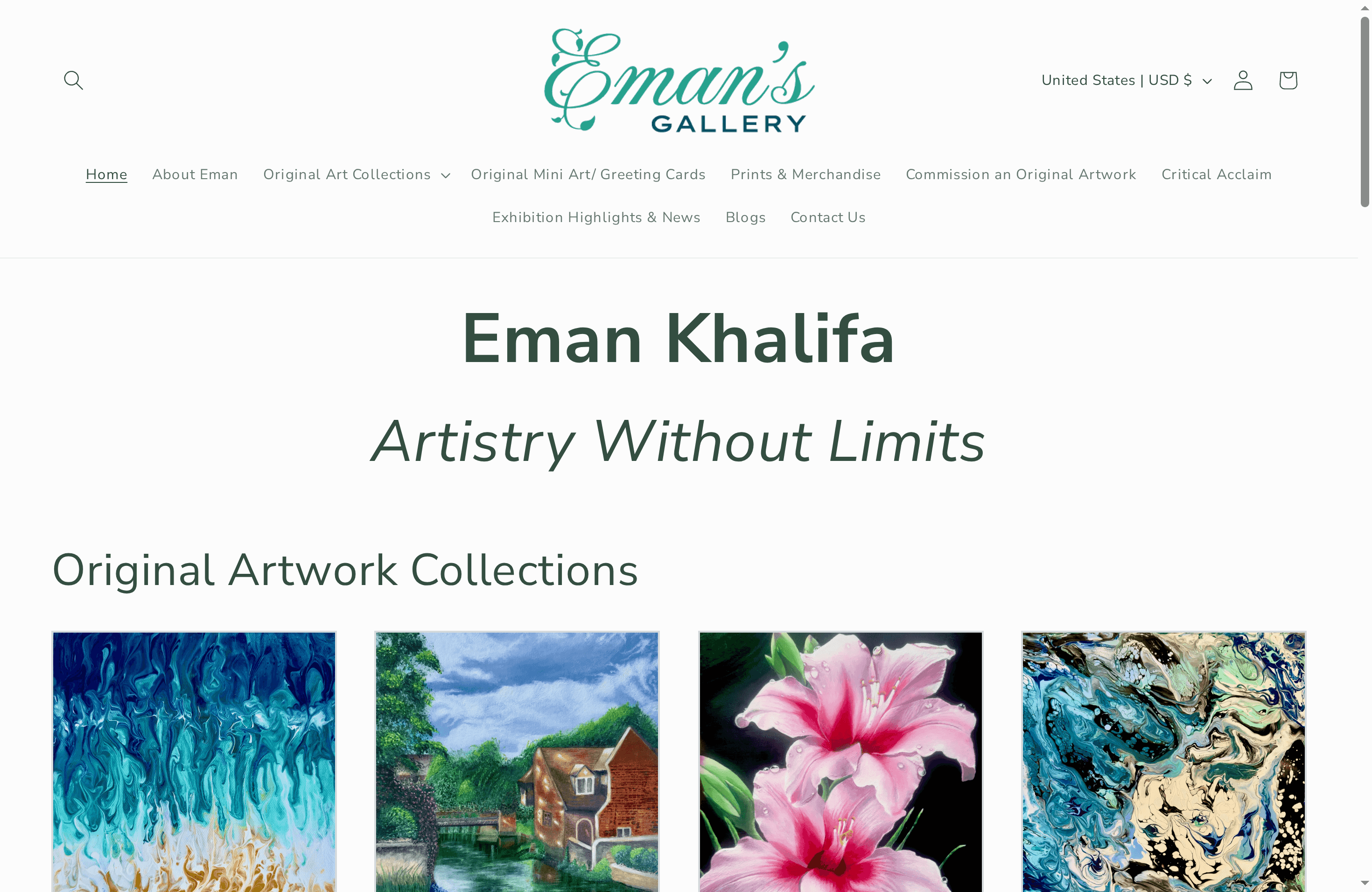
Emansgallery offers original handmade paintings and museum-quality canvas prints by artist Eman Khalifa, shipped worldwide from the UK, USA, Canada, Australia, and beyond. Every piece is designed to serve as a statement anchor or a gallery wall addition. The Good Tidings original painting in fluid blue and gold makes a strong focal point above a sofa or console. The City in Grids canvas print suits symmetrical grid arrangements with its geometric abstract composition. Browse the full collection at Emansgallery to find the piece that anchors your next display.
FAQ
What height should wall art be hung at?
Art should be centered at 57–60 inches from the floor, matching average eye level. This standard applies to single pieces, pairs, and gallery wall arrangements equally.
How wide should art be above a sofa?
Art above a sofa should cover two-thirds to three-quarters of the sofa’s width, with a 6–12 inch gap between the top of the sofa and the bottom of the frame.
How do I start a gallery wall?
Place your largest anchor piece at center height first, then work outward with smaller frames. Arrange everything on the floor before hanging, and use paper templates taped to the wall to confirm spacing.
What are the best display options for renters?
Leaning large pieces on furniture, using adhesive strips rated by weight, and installing picture ledges are the most effective rental-friendly options. All three avoid permanent wall damage.
How much wall space should a gallery wall fill?
A gallery wall should fill approximately 60% of the wall or the space above furniture. Less than that reads as sparse; more can feel crowded and unbalanced.
Stay Connected
- ✨ Explore Eman Khalifa's original art, fine art prints and art-inspired merchandise.
- Follow Eman Khalifa's art journey on: Instagram @emans_gallery and Facebook
- Watch Eman Khalifa creating live art on: YouTube @emans_gallery
