


Wall Canvas Art: How to Choose, Hang, and Style It
TL;DR:
- Wall canvas art includes original paintings and high-quality prints used as focal points in home decor. Proper sizing, secure hanging methods, and strategic placement ensure maximum visual impact and longevity. Investing in quality canvas artwork and professional styling enhances interior aesthetics and preserves art value over time.
A wall canvas is any artwork, whether an original painting or a high-quality print, produced on canvas material and designed to hang on a wall as a focal point in a room. Canvas is the standard substrate for fine art display in residential interiors, used by everyone from gallery collectors to first-time decorators. The format spans original fluid abstract paintings by artists like Eman Khalifa, museum-quality canvas prints for walls, and personal photo canvases from services like Mixtiles. What makes canvas art a consistent choice for home decor is its combination of visual depth, texture, and flexibility across nearly every interior style.
What types of wall canvas art are available?
Canvas artwork for home falls into three distinct categories: original paintings, artist-authorized canvas prints, and digital reproductions. Each serves a different buyer and a different budget.
Original paintings are one-of-a-kind works created directly on stretched canvas. They carry the texture of brushwork, the unpredictability of fluid art, and the permanence of a unique object. Styles range from geometric abstract and expressionist figurative to floral, seascape, and landscape. Emansgallery specializes in this category, offering original handmade works by artist Eman Khalifa in fluid abstract, tonalist, and geometric styles.
Canvas prints are high-resolution reproductions of original artworks or photographs, printed onto canvas using archival inks and stretched over a wooden frame. Museum-quality canvas prints replicate the texture and color depth of originals at a fraction of the cost. Emansgallery produces these alongside its originals, covering styles from conceptual expressionism to monochrome outline work.
Digital reproductions and photo canvases convert personal photographs or licensed digital images into canvas prints. Services like Mixtiles offer this at a consumer level, while fine art printers produce gallery-grade versions.
| Type | Cost Range | Uniqueness | Best For |
|---|---|---|---|
| Original painting | High | One of a kind | Collectors, statement rooms |
| Artist canvas print | Mid | Limited or open edition | Art lovers on a budget |
| Photo canvas | Low to mid | Personal only | Family spaces, gifts |
| Digital reproduction | Low | Mass produced | Rental homes, staging |
Pro Tip: Match the canvas art style to your room’s dominant color palette before buying. A fluid blue-gold abstract reads differently against warm gray walls than against white, and seeing a color swatch next to a digital preview saves costly returns.
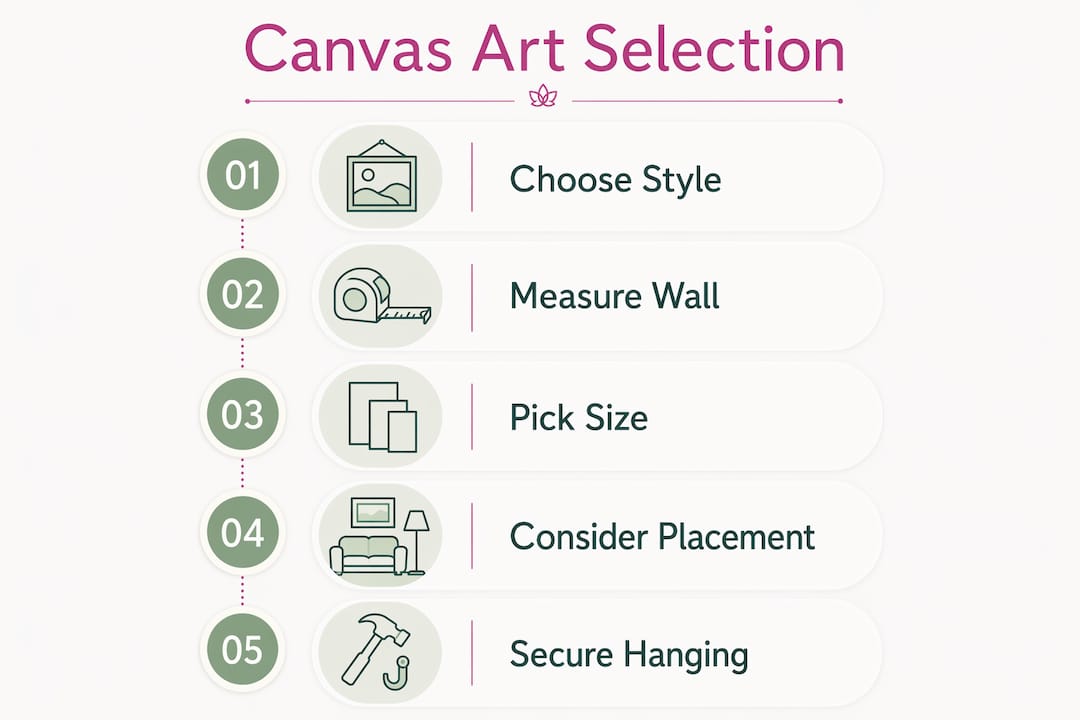
How do you choose the right size canvas for your wall?
Size is the single most common mistake in canvas art placement. Design standards recommend that canvas art occupy 60–75% of the available wall width above a furniture piece. That means a 72-inch sofa calls for a canvas or grouping between 43 and 54 inches wide. Going smaller makes the art look like an afterthought.
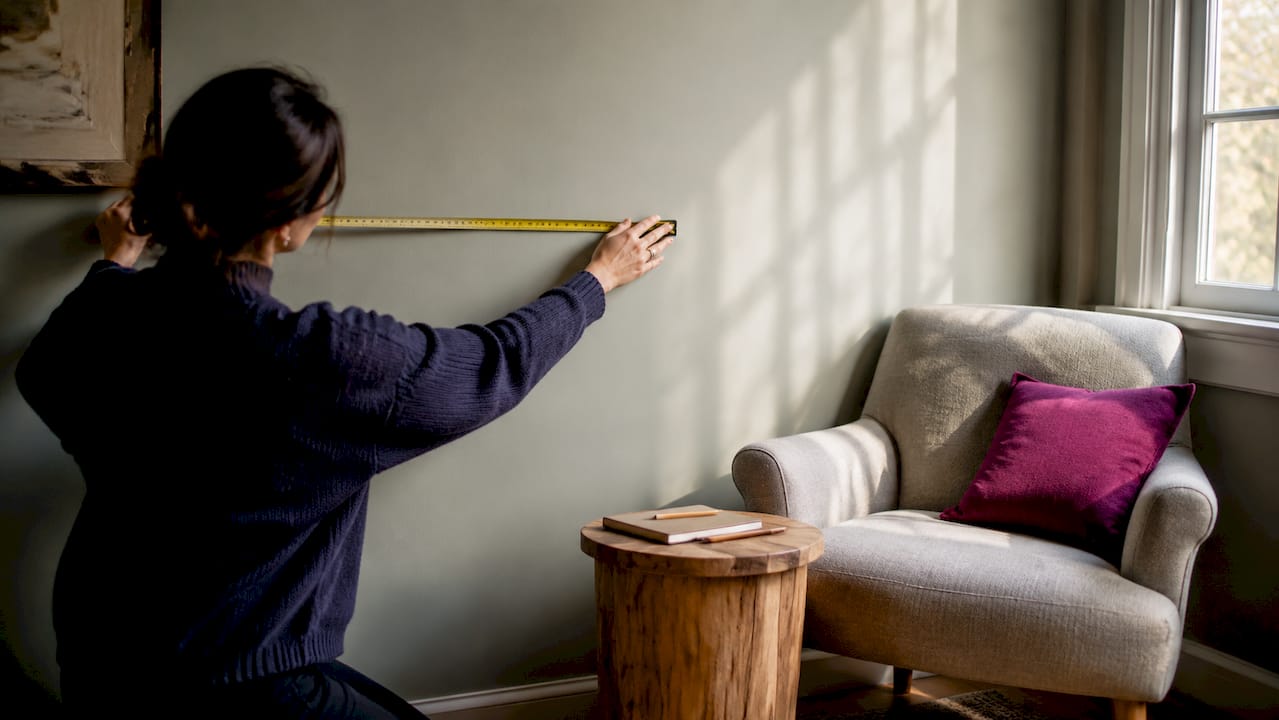
Height matters just as much as width. The standard museum hang positions the center of the artwork at 57–60 inches from the floor. That range corresponds to average eye level and is used by professional galleries worldwide. In rooms with high ceilings, you can raise this slightly, but the center of the piece should never exceed 65 inches from the floor or the art disconnects from the furniture below it.
Spacing between the bottom of the canvas and the top of the furniture also affects visual balance. Leaving 6–12 inches between a sofa or console and the bottom edge of the canvas creates breathing room without making the art appear to float. Less than 6 inches looks crowded. More than 12 inches breaks the visual connection between the art and the furniture.
For large wall canvas pieces in open-plan spaces, scale up proportionally. A single canvas over 48 inches wide works as a standalone statement. Anything smaller in a large room benefits from grouping with complementary pieces.
Pro Tip: Measure the hanger drop before you drill. The hanger drop is the distance from the top of the canvas frame to the hanging hardware on the back. Measuring this distance and subtracting it from your target center height gives you the exact nail position on the first try.
What are the best methods to hang a canvas securely?
How you hang a canvas depends on its weight, your wall type, and whether you want a permanent or removable installation. The four main hardware options are adhesive strips, picture hooks with nails, wall anchors, and French cleats.
Adhesive mounting strips work for lightweight canvases under 5 lbs. They are the renter-friendly option. Clean the wall surface with rubbing alcohol before applying strips, since dust and skin oils are the primary cause of adhesion failure. Skipping this step is why strips fall.
Picture hooks and nails handle most standard canvas prints up to 20 lbs on drywall. Use two hooks spaced apart rather than one central hook for any canvas wider than 24 inches. A single central fixing causes the hanging wire to stretch over time, and the canvas rotates out of level. Two fixings spaced at 60–70% of the frame’s width prevent this entirely.
Wall anchors are required for drywall or plaster when no stud is available. Never hammer a plasterboard anchor directly into the wall. Hammering deforms the anchor inside the lining, causing it to loosen within months. Always use a screwdriver to seat anchors correctly.
French cleats are the professional solution for heavy or large wall canvas pieces over 15 kg. French cleat systems distribute weight evenly across wall studs and allow easy repositioning without new holes. For pieces over 15 kg, toggle bolts or French cleats are the recommended standard.
Before drilling any hole, use a multi-detector tool. A quality detector costs roughly $35 and identifies hidden electrical wires and water pipes behind drywall. Skipping this step is the most common and costly mistake in residential art installation.
Pro Tip: Let any canvas print acclimatize to your room for at least 24 hours before hanging. Canvas and wooden frames expand and contract with humidity changes, and mounting immediately after unpacking risks warping or loosening.
How do you style canvas art for maximum visual impact?
Styling canvas artwork for home is about creating intentional relationships between the art, the furniture, and the light in a room. A single large statement piece works best in rooms with a clear focal wall, such as above a sofa, bed, or fireplace. Multi-panel arrangements suit longer walls and open-plan spaces where one piece would look isolated.
When grouping canvases, follow these principles:
- Anchor the arrangement to a central piece and build outward symmetrically or in an organic cluster. Keep the center of the group at eye level (57–60 inches from the floor).
- Coordinate, do not match. Art that perfectly matches the room’s colors looks decorative but not interesting. Choose one color in the canvas that echoes an accent in the room, such as a throw pillow or rug, and let the rest contrast.
- Avoid direct sunlight. UV exposure fades canvas prints and original paintings over time. Position art away from south-facing windows or use UV-filtering glass for framed pieces.
- Use lighting deliberately. A picture light mounted above the canvas or a directional track light aimed at 30 degrees from the wall creates depth and draws the eye. Flat ambient lighting flattens the texture of canvas art.
Proper scale and placement transform canvas prints from decoration into integral parts of a room’s ambiance. That is the difference between a room that looks furnished and one that looks designed. For detailed guidance on displaying art in upscale interiors, the canvas print display tips at Emansgallery cover gallery-style hanging for residential spaces.
Modern canvas decor in 2026 favors large-scale single works over cluttered gallery walls. The trend reflects a broader shift toward intentional minimalism in interior design, where one strong piece carries more weight than a dozen small ones. Collections like those at Emansgallery and CanvasWorld span thousands of unique designs, from botanical and architectural to abstract and figurative, giving every room a viable starting point.
Key takeaways
The most effective approach to wall canvas art combines correct sizing, secure hardware, and deliberate placement to make the artwork function as a designed element rather than an afterthought.
| Point | Details |
|---|---|
| Size to furniture width | Canvas art should occupy 60–75% of the wall width above the furniture piece below it. |
| Center at eye level | Hang the center of any canvas at 57–60 inches from the floor for standard rooms. |
| Use two fixings for wide pieces | Two hooks spaced at 60–70% of frame width prevent rotation and keep art level over time. |
| Acclimatize before hanging | Leave canvas in the room for 24 hours before mounting to prevent warping from humidity changes. |
| Match style, not color | Choose art that echoes one accent color in the room rather than matching the full palette. |
What i have learned hanging canvas art in real rooms
The mistake I see most often is buying art that is too small. People stand in a store or browse online and choose a canvas that looks substantial on its own. Then they hang it above a six-foot sofa and it disappears. The 60–75% width rule exists for a reason, and it is almost always ignored by first-time buyers.
The second mistake is skipping the acclimatization step. I have seen beautifully framed canvas prints develop a visible bow within a week of hanging because they went straight from a cold shipping box onto a warm interior wall. Twenty-four hours in the room costs nothing and prevents a problem that is genuinely difficult to fix after the fact.
What I find most underrated is the effect of lighting. A canvas with no dedicated light source looks flat regardless of how good the art is. A single adjustable track light or a clip-on picture light changes the entire reading of the piece. The texture of the canvas becomes visible. The colors shift. The room feels considered rather than assembled.
Investing in quality canvas art, whether an original painting or a well-produced print, is one of the few home decor decisions that holds its value and meaning over time. The art styling guide at Emansgallery covers this in more depth for anyone working through a full room installation.
— Eman
Discover original canvas art from Emansgallery
Emansgallery offers original handmade paintings and museum-quality canvas prints by artist Eman Khalifa, shipped worldwide from the UK, USA, Canada, Australia, and beyond. Each piece is designed to function as a room’s focal point, not just fill a wall.

The collection includes fluid abstract ocean paintings like Good Tidings, a blue-gold original ideal for living rooms and open-plan spaces, and conceptual canvas prints like Private Eye for modern interiors that favor bold, graphic work. Browse the full wall art prints collection to find original paintings and canvas prints sized for your specific wall. Every original is one of a kind. Every print is produced to archival standards.
FAQ
What is the standard height to hang canvas art?
The center of a canvas should sit 57–60 inches from the floor. This aligns with average eye level and is the standard used by professional galleries.
How do i hang a heavy canvas without damaging the wall?
Use toggle bolts or a French cleat system for pieces over 15 kg. Always use a multi-detector tool before drilling to avoid hitting electrical wires or pipes.
What size canvas works above a sofa?
Choose a canvas or grouping that spans 60–75% of the sofa’s width. For a standard 72-inch sofa, that means a canvas between 43 and 54 inches wide.
Can i use adhesive strips to hang canvas prints?
Adhesive strips work for lightweight canvases under 5 lbs. Clean the wall with rubbing alcohol first, as dust and oils are the primary cause of strip failure.
What is the difference between an original painting and a canvas print?
An original painting is a unique handmade work on canvas. A canvas print is a high-resolution reproduction of an original, printed with archival inks onto stretched canvas.
Stay Connected
- ✨ Explore Eman Khalifa's original art, fine art prints and art-inspired merchandise.
- Follow Eman Khalifa's art journey on: Instagram @emans_gallery and Facebook
- Watch Eman Khalifa creating live art on: YouTube @emans_gallery
