


Why Gallery Walls Stay Popular: 65% Embrace Personal Style
Gallery walls often get labeled as cluttered relics of dated design trends, but interior design experts emphasize their versatility and enduring appeal when crafted with intention. Far from outdated, they remain dynamic, evolving design elements that adapt beautifully to contemporary aesthetics and personal storytelling. This guide clarifies why gallery walls continue thriving in 2026 and reveals how to style them for maximum impact in your living spaces.
Table of Contents
- Introduction To Gallery Walls
- The Timeless Appeal Of Gallery Walls
- Evolving Trends In Gallery Wall Design
- Common Misconceptions About Gallery Walls
- Practical Implementation Tips For Stylish Gallery Walls
- Comparison Of Gallery Wall Styles And Layouts
- Conclusion: Bringing It All Together
- Discover Original Contemporary Art For Your Gallery Wall
Key Takeaways
| Point | Details |
|---|---|
| Personal Expression | Gallery walls function as storytelling tools showcasing meaningful art and memories. |
| Modern Evolution | Today’s trends favor cohesive color palettes, fewer larger pieces, and mixed media textures. |
| Myth Busting | Proper design prevents clutter and actually enhances spatial perception. |
| Flexible Installation | Damage-free adhesive strips and modular ledges enable easy updates and adjustments. |
| Style Diversity | Options range from minimalist grids to eclectic layered compositions for all tastes. |
Introduction to Gallery Walls
Gallery walls are curated collections of art, photographs, and objects displayed together on a single wall to create visual impact. They originated from salon-style art exhibitions in European academies, where diverse artworks were hung closely together to maximize display space and showcase artistic variety. Today, they serve as powerful tools for personalizing interiors and transforming blank walls into meaningful focal points.
The concept has evolved significantly from its historical roots. Modern gallery walls balance artistic expression with intentional design principles. Foundational gallery wall concepts include:
- Strategic placement of varying artwork sizes and media types
- Cohesive themes or color palettes linking disparate pieces
- Thoughtful spacing that creates visual rhythm without chaos
- Flexibility to update and rearrange as tastes change
Whether you favor abstract contemporary paintings, family photographs, or mixed media arrangements, gallery walls adapt to express your unique aesthetic vision.
The Timeless Appeal of Gallery Walls
Gallery walls endure because they provide a way to showcase personal stories through curated art collections that make spaces unique and inviting. Unlike generic decorator art, these displays reflect genuine connections to places, people, and experiences. You create a visual autobiography that guests can read and understand.
The emotional warmth they generate distinguishes gallery walls from minimalist design approaches. Gallery walls transform blank, cold walls into warm and inviting focal points that convey character and depth. Walking into a room with a thoughtfully arranged gallery wall feels immediately more personal and welcoming than facing empty expanses of paint.
“The beauty of gallery walls lies in their ability to evolve with you, capturing different life chapters in a single, cohesive display.”
Diversity of media amplifies this appeal. Mixing artwork, photographs, heirlooms, and memorabilia enhances emotional connection at home. You might combine:
- Original contemporary paintings anchoring the arrangement
- Family photographs documenting cherished moments
- Travel souvenirs evoking adventure and discovery
- Children’s artwork celebrating creative milestones
- Vintage mirrors or objects adding textural variety
This layered storytelling approach creates spaces that feel genuinely lived in rather than staged for magazine spreads.
Evolving Trends in Gallery Wall Design
Gallery walls have evolved to feature cohesive color palettes, fewer larger pieces, and mixed media for texture and interest. The cluttered, chaotic arrangements of the past have given way to more intentional compositions that balance visual impact with breathing room. Modern gallery walls in 2026 prioritize quality over quantity.
Contemporary design preferences reflect this shift toward restraint. Integration of textiles, plants, oversized pieces, and both minimalist and maximalist aesthetics demonstrates flexibility in current styles. You can choose approaches matching your space:
- Minimalist Grids: Symmetrical layouts with uniform spacing and consistent frames create calm, organized aesthetics perfect for Scandinavian or modern interiors.
- Eclectic Layers: Asymmetrical arrangements mixing frame styles, sizes, and media types suit bohemian or transitional spaces seeking personality.
- Monochromatic Themes: Black and white photography or art in similar tones provides sophistication without overwhelming color.
- Statement Anchors: One or two large original paintings surrounded by smaller complementary pieces establish clear focal points.
Oversized artwork plays a crucial anchoring role. Large pieces ground the composition and prevent the scattered, busy appearance that gives poorly designed gallery walls a bad reputation. Surrounding these anchors with smaller works creates natural visual hierarchy.
Pro Tip: Start with your largest piece positioned at eye level (approximately 57-60 inches from floor to center), then build outward with progressively smaller items maintaining consistent spacing between frames.

Explore modern gallery wall styles to understand different compositional approaches and find inspiration matching your aesthetic preferences.
Common Misconceptions about Gallery Walls
Myth 1: Gallery walls look cluttered and dated. The truth? Gallery walls are not outdated or cluttered when designed intentionally and creatively. Poor execution creates clutter, not the concept itself. Thoughtful curation, consistent spacing, and cohesive themes produce sophisticated results that enhance rather than detract from interior design.
Myth 2: They make rooms feel smaller. Actually, proper use of scale and spacing with oversized pieces prevents gallery walls from visually shrinking rooms. Strategic placement of large anchor artwork draws the eye upward and outward, creating perceived spaciousness. Small, scattered frames in tight clusters do reduce perceived space, but balanced arrangements achieve the opposite effect.
“The key to avoiding visual clutter is treating your gallery wall as a single unified artwork rather than a collection of individual pieces competing for attention.”
Myth 3: All frames must match perfectly. This rigid thinking limits creative expression. Eclectic mixing of frame styles, finishes, and materials creates visual interest when united by common elements like consistent matting, coordinated color palettes, or thematic cohesion. Perfect uniformity can actually feel sterile and uninspired compared to thoughtfully varied arrangements.
Understanding these gallery wall design misconceptions empowers confident decision making when planning your display.
Practical Implementation Tips for Stylish Gallery Walls
Successful gallery walls begin with smart artwork selection and strategic anchoring. Choose one or two large pieces as compositional foundations. These anchors should be your favorite works, the ones that sparked the entire project. Surrounding smaller pieces then support rather than compete with these focal points.
Installation flexibility matters more now than ever. New technologies like damage-free adhesive hanging and modular ledges simplify installation and enable flexible arrangements. You can rearrange displays seasonally or as your collection grows without damaging walls or frames. Picture ledges allow layering and quick swaps that traditional hanging cannot match.
Mixing media and textures elevates visual interest:
- Combine original contemporary art pieces with photographs and prints
- Add woven textiles or macrame for tactile dimension
- Include small floating shelves supporting plants or sculptural objects
- Layer frames of different depths creating shadow play
Pro Tip: Create a paper template layout on the floor first, adjusting spacing and arrangement until satisfied, then transfer measurements to the wall for foolproof installation.
Scale and spacing directly affect room perception. The table below shows recommended spacing based on wall and artwork dimensions:
| Wall Height | Artwork Size | Spacing Between Pieces | Total Gallery Width |
|---|---|---|---|
| 8-9 feet | Mix of 16x20 to 30x40 inches | 2-3 inches | 60-70% of wall width |
| 9-10 feet | Mix of 20x24 to 40x50 inches | 3-4 inches | 65-75% of wall width |
| 10+ feet | Mix of 24x36 to 50x60 inches | 4-6 inches | 70-80% of wall width |
For compact areas, learn strategies for displaying art in small spaces that maximize impact without overwhelming limited square footage. Interior designers working with clients can reference tips for selecting gallery wall art to guide professional recommendations.
Comparison of Gallery Wall Styles and Layouts
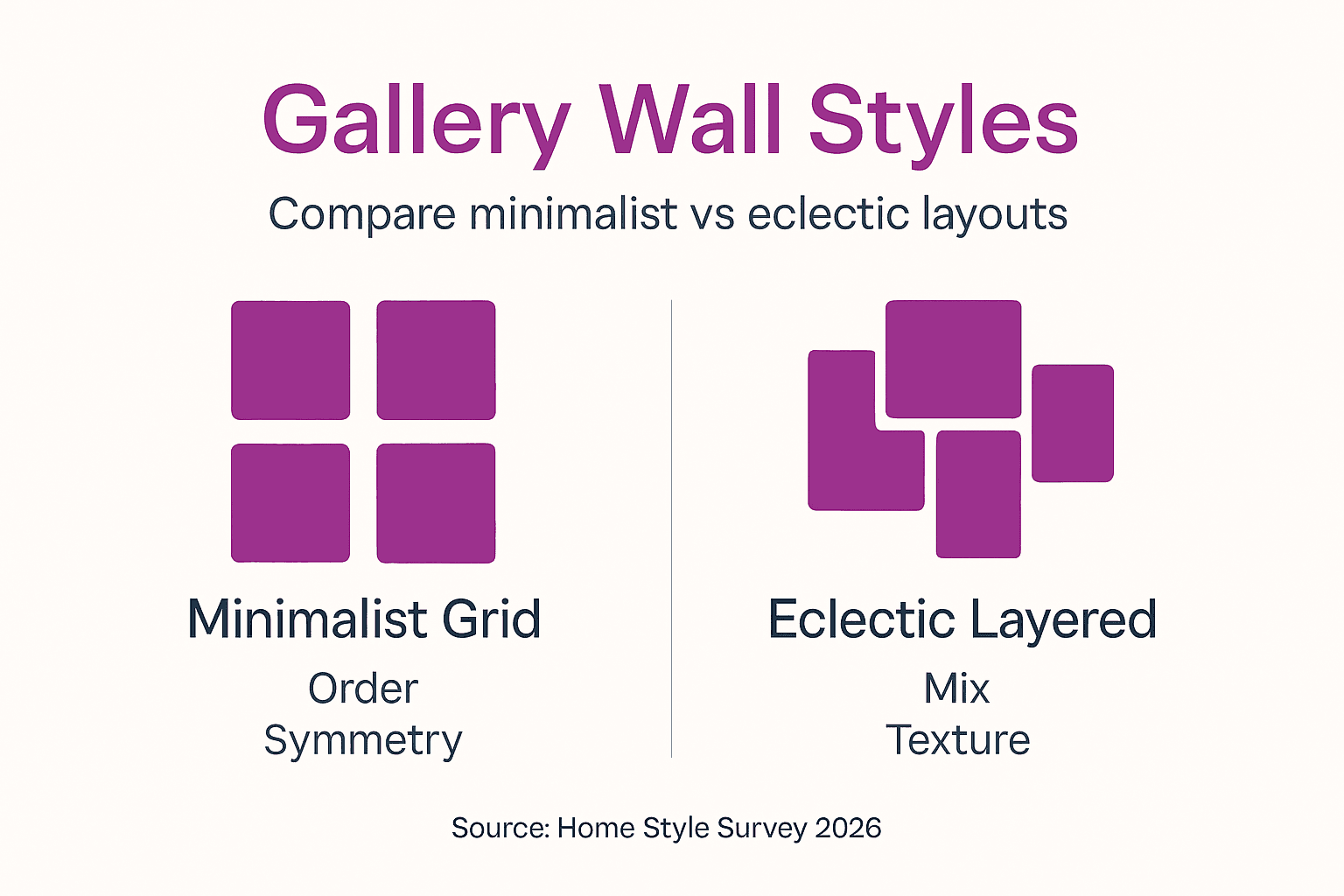
Choosing between minimalist and eclectic approaches shapes your gallery wall’s entire character. Each style offers distinct advantages depending on your space, existing decor, and personal preferences.
| Feature | Minimalist Grid Layout | Eclectic Layered Style |
|---|---|---|
| Arrangement | Symmetrical, aligned rows and columns | Asymmetrical, organic clustering |
| Frame Style | Uniform frames in single finish | Mixed frames, varied finishes |
| Artwork Sizes | Consistent or mathematically proportioned | Varied sizes from small to large |
| Color Palette | Monochromatic or highly limited | Diverse, coordinated by theme |
| Visual Impact | Clean, modern, calming | Dynamic, personal, energetic |
| Best For | Contemporary, Scandinavian interiors | Bohemian, transitional spaces |
| Ease of Updates | Requires removing entire section | Individual pieces swap easily |
Minimalist grid layouts excel in spaces needing visual calm and order. The structured symmetry creates restful environments perfect for bedrooms, home offices, or meditation spaces. Consistent spacing and uniform frames produce gallery-like sophistication.
Eclectic layered styles shine when expressing personality matters most. The organic, collected-over-time appearance feels authentic and lived-in. This approach accommodates growth as you acquire new pieces, simply integrating them into existing arrangements.
Frame decisions significantly influence coherence. Minimalist approaches demand precise frame matching for visual unity. Eclectic styles allow creative mixing but benefit from unifying elements like:
- Consistent mat colors across varied frame styles
- Coordinated metal finishes (all gold, all silver, all black)
- Similar wood tones even with different frame profiles
- Unified color story across artwork despite varied media
Review detailed gallery wall style comparisons to determine which approach aligns with your design vision and lifestyle needs.
Conclusion: Bringing It All Together
Gallery walls remain relevant and popular in 2026 precisely because they combine emotional resonance with aesthetic flexibility. Unlike trendy design elements that fade when fashions shift, gallery walls adapt to evolving tastes while maintaining their core function as personal storytelling devices. The misconceptions surrounding them stem from poor execution, not flawed concepts.
Modern tools and contemporary design trends make creating sophisticated gallery walls more accessible than ever. Damage-free hanging systems eliminate installation anxiety. Cohesive color palettes and strategic use of large anchor pieces prevent the cluttered appearance of earlier iterations. Mixed media options incorporating textiles, plants, and dimensional objects add depth and interest.
You now possess the knowledge to confidently plan and execute gallery walls that enhance your living spaces. Start by selecting meaningful original contemporary art pieces that resonate personally, then build arrangements reflecting your unique story and aesthetic vision. The beauty lies in creating displays that grow and change alongside your life journey.
Find inspiration and practical guidance through gallery wall examples and techniques to launch your project today.
Discover Original Contemporary Art for Your Gallery Wall
Ready to transform your space with a stunning gallery wall? Explore curated collections of original contemporary paintings perfect for anchoring sophisticated displays. Whether you need a bold statement piece like Good Tidings or the dramatic depth of Nocturned, you’ll find artwork crafted to elevate your home’s ambiance.
Our collection includes large-scale originals that anchor gallery arrangements and smaller companion pieces that build cohesive visual stories. Museum-quality canvas prints offer flexible options for mixing textures and dimensions throughout your display. Each piece ships ready to hang, making your gallery wall project effortless from selection to installation.
Frequently Asked Questions
What Makes a Gallery Wall Timeless Rather Than a Trend?
Intentional design and authentic personal storytelling create timeless gallery walls that transcend passing trends. When you curate meaningful art and objects reflecting genuine connections rather than following Pinterest formulas, the result feels permanently relevant. Cohesive themes, balanced spacing, and quality pieces ensure your display ages gracefully alongside evolving interior styles.
Can Gallery Walls Work in Small Rooms Without Overcrowding?
Absolutely, when you apply proper scale and spacing principles. Use one or two larger anchor pieces instead of many small frames to create focus without visual chaos. Vertical arrangements draw eyes upward, making ceilings appear higher and rooms more spacious. Limiting your color palette to two or three tones prevents overwhelming compact spaces.
How Do I Mix Media Effectively in a Gallery Wall?
Balance different textures and materials through coordinated color palettes and consistent spacing. Pair original paintings with photographs sharing similar tones, add woven textiles for tactile contrast, and include small plants or objects on floating shelves. The key is unifying diverse elements through common threads like complementary colors, related themes, or consistent frame finishes that tie everything together visually.
Are Larger Artworks Necessary for Modern Gallery Walls?
Large anchor pieces dramatically improve modern gallery wall success by establishing clear focal points and reducing perceived clutter. While not absolutely required, oversized artwork grounds compositions and provides visual breathing room that smaller scattered frames cannot achieve. One 30x40 inch painting surrounded by complementary smaller works creates more sophisticated impact than twenty small frames competing for attention.
What Installation Methods Make Gallery Walls Easy to Adjust?
Damage-free adhesive hanging strips support surprising weight while allowing clean removal and repositioning without wall damage. Modular picture ledges enable instant rearrangement by simply leaning frames rather than hammering nails. These flexible systems let you experiment with layouts, swap seasonal pieces, and grow your collection without commitment or repair costs. Command strips and ledge systems have revolutionized gallery wall accessibility for renters and frequent redecorators.
Recommended
- Gallery Wall Style: Transforming Spaces With Art - Eman’s Gallery
- 8 Steps to a Perfect Gallery Wall Checklist for Modern Homes
- Why Display Art at Home: Transforming Modern Spaces
- 7 Innovative Interior Art Display Ideas for Modern Homes - Eman’s Gallery
Stay Connected
- ✨ Explore Eman Khalifa’s original art and fine art prints
- 📸 Follow Eman Khalifa’s art journey on: Instagram @emans_gallery and Facebook Eman’s Gallery
- 📹 Watch Eman Khalifa creating live art on: YouTube @emans_gallery
