


What Is Canvas Art? Types, Techniques, and Display Tips
TL;DR:
- Canvas art involves creating artwork on durable fabric surfaces like cotton or linen. It offers visual depth, lasting quality, and versatility for decorating homes and offices.
Canvas art is artwork created by applying paint or printed images onto canvas fabric, a strong woven cloth traditionally made from cotton or linen. The textured surface of canvas, known as “tooth,” adds visual depth that flat paper prints cannot replicate. That quality makes canvas one of the most enduring surfaces in both fine art and modern interior design. Emansgallery, an online contemporary art gallery by artist Eman Khalifa, offers original hand-painted canvases and museum-quality canvas prints that demonstrate the full range of what this medium can achieve.
What is canvas art and how is it defined?
Canvas art is the broad term for any artwork produced on canvas fabric, whether painted by hand or reproduced through digital printing. The industry uses the term “canvas art” to cover everything from oil paintings by Old Masters to modern inkjet prints sold for home decoration. Understanding the distinction matters because it affects quality, price, and how a piece fits into a space.
Canvas fabric is a strong, woven cloth traditionally made of linen or cotton. It provides a durable surface for both painting and printing. Its texture gives artwork a tactile presence that smooth surfaces like glass or photo paper simply do not offer.
Canvas art is popular for decorating both commercial and personal spaces because it combines style, personality, and affordability. That combination explains why it appears in everything from luxury hotel lobbies to apartment living rooms.
What materials and techniques are used in creating canvas art?
The quality of any canvas artwork depends directly on the fabric and the method used to apply the image. Both factors affect how the finished piece looks, how long it lasts, and how it feels on a wall.
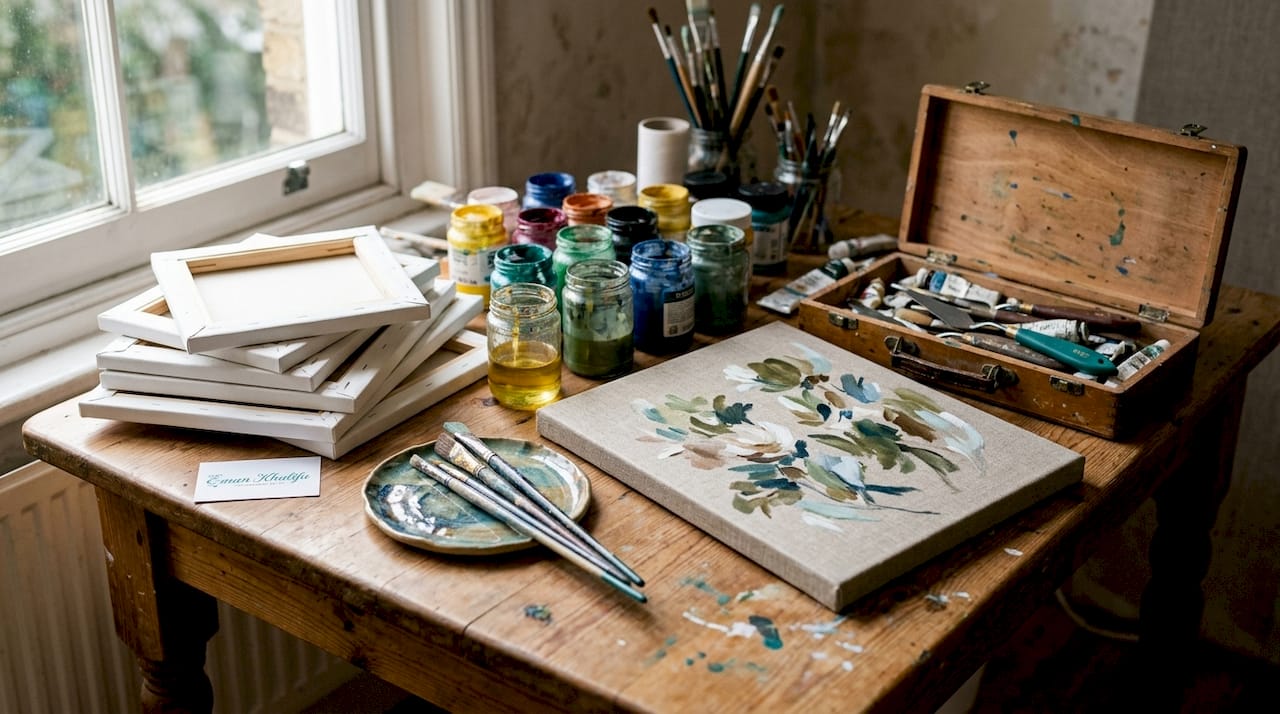
Canvas fabric types
Three main fabric types are used in canvas art production:
- Cotton canvas is the most common choice. It is affordable, consistent in texture, and works well with both acrylic and oil paints. Most mass-produced canvas prints use cotton or a cotton-polyester blend.
- Linen canvas is denser and more durable than cotton. Professional painters and galleries favor linen for original works because it resists warping and holds paint with greater stability over decades.
- Synthetic blends combine polyester with cotton or linen to reduce cost while maintaining some texture. They are common in entry-level canvas prints.
Painting techniques
Traditional canvas paintings use oil, acrylic, or mixed media applied directly by hand. Oil paint creates rich, layered color with a slow drying time that allows artists to blend and rework areas. Acrylic dries faster and is more flexible, making it less prone to cracking over time. Mixed media works combine paint with collage, ink, or texture paste to build surface dimension.
Canvas print production
Canvas prints reproduce images digitally on canvas using inkjet printers loaded with archival-quality inks. High-quality canvas prints produce vibrant colors and resist wrinkles and fading better than paper posters. With proper care, canvas prints can last 75 years, making them a genuinely long-term investment for a home or office.
Pro Tip: Choose linen or heavyweight cotton canvas for original paintings you plan to keep long-term. For prints, ask whether the printer uses pigment-based inks rather than dye-based inks. Pigment inks resist fading significantly longer.
What types of canvas art are commonly available?
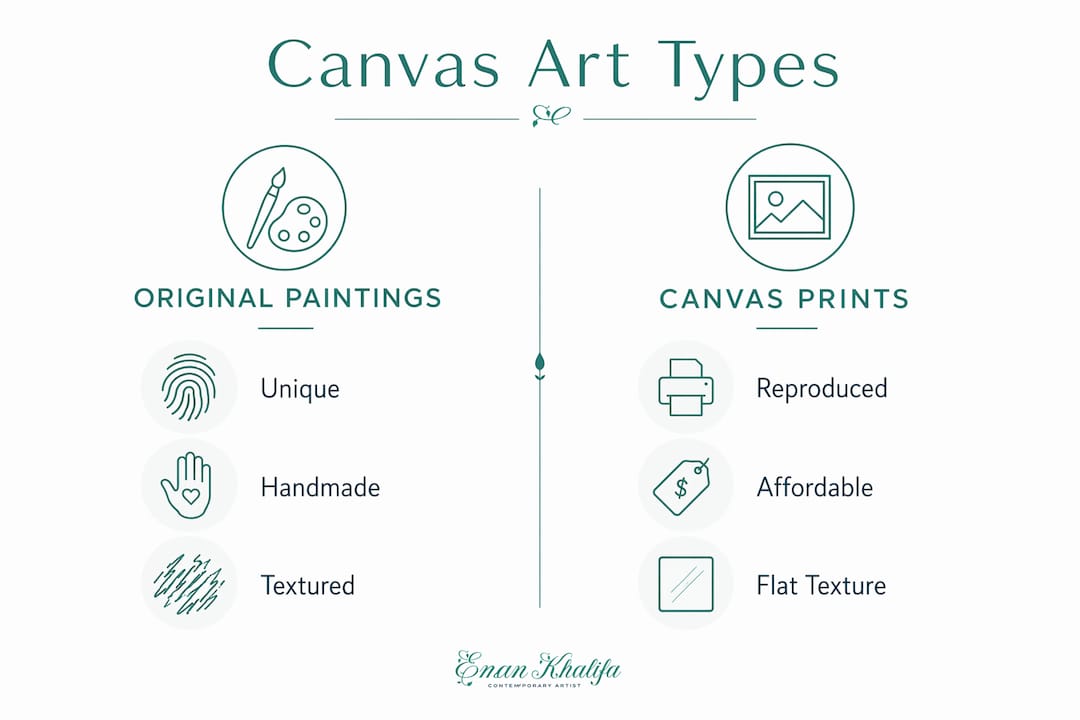
Three distinct types of canvas art exist, and each serves a different purpose, budget, and aesthetic goal.
| Type | Creation method | Uniqueness | Cost | Durability | Texture |
|---|---|---|---|---|---|
| Canvas painting | Hand-painted by an artist | One of a kind | Higher | Very high | Rich, variable |
| Canvas print | Digitally printed on canvas | Reproducible | Moderate | High | Consistent, uniform |
| Canvas poster | Printed on thin or low-grade canvas | Reproducible | Low | Lower | Minimal |
Canvas paintings are original artworks painted directly onto canvas. No two are identical. The brushwork, layering, and physical marks left by the artist create a surface that changes with the light throughout the day. Collectors and interior designers prize original paintings for exactly this reason.
Canvas prints reproduce a digital image or a photograph of an original painting onto canvas fabric. Canvas prints have a textured surface made from cotton, polyester, or linen blends, which differs from smoother fine art or photo paper. That texture affects visual depth and tactile appeal, making a well-made canvas print feel closer to an original painting than a flat paper reproduction. For buyers who want the look of fine art at a lower price point, a quality canvas print is the practical choice.
Canvas posters use thinner or lower-grade canvas materials. They are the most affordable option but offer less durability and less visual depth. They suit temporary spaces or frequently updated displays.
Understanding these differences helps you make a better decision when choosing art for your space.
What are the benefits of canvas art for home and office decoration?
Canvas art is the preferred choice for interior decoration because it offers a combination of visual depth, durability, and flexibility that no other medium matches at the same price range.
“The tactile nature of canvas provides a depth and presence missing from flat digital displays or paper prints.” — The Good Men Project
Canvas art offers versatility by matching diverse interior styles from rustic to modern industrial, largely due to its fabric texture. A single abstract canvas can anchor a minimalist living room or add warmth to a corporate reception area. That adaptability is rare in wall decor.
The core benefits of canvas art for home and office settings include:
- Durability. Canvas prints are more durable than acrylic prints, resist fingerprints better, and can last 75 years with proper care.
- No glass required. Canvas art hangs without a frame or glass, which reduces weight and eliminates glare.
- Customizable size. Canvas can be printed or painted at almost any dimension, from small accent pieces to large-scale statement walls.
- Easy maintenance. A dry or lightly damp cloth removes dust without damaging the surface.
- Affordability across budgets. Canvas prints bring the look of original art to spaces where purchasing an original painting is not practical.
Canvas prints for modern luxury homes are particularly valued because they deliver a gallery-quality appearance without the cost or fragility of framed glass prints.
How to display and care for canvas art effectively
Hanging canvas art correctly protects the piece and maximizes its visual impact. The method you use depends on the canvas size and whether it is framed or frameless.
- Choose the right hardware. Small canvases up to 16 x 20 inches hang securely with a sawtooth hanger. Larger canvases need D-ring hardware with a hanging cord for better weight distribution. Proper hanging hardware maintains stability and prevents the canvas from tilting over time.
- Decide between framed and frameless. Gallery-wrapped canvases continue the image around the edges for a stylish three-dimensional effect. Frameless options are lighter, more modern in appearance, and easier to move or rotate.
- Position away from direct sunlight. UV light fades both painted and printed canvas over time. Hang canvas art on walls that receive indirect light or use UV-filtering window film in sun-heavy rooms.
- Control humidity. Excess moisture causes canvas to warp or develop mold. Avoid hanging canvas art in bathrooms or directly above radiators.
- Clean gently. Use a soft, dry brush or microfiber cloth to remove dust. Never use water or cleaning sprays directly on the canvas surface.
For decorating ideas, consider grouping three canvases of different sizes in a staggered arrangement on a large wall. A single oversized canvas works well as a focal point above a sofa or bed. For narrow hallways, a vertical series of small canvases creates rhythm without crowding the space.
Pro Tip: Renters or frequent redecorators should use adhesive picture-hanging strips rated for the canvas weight. They leave no wall damage and allow easy repositioning without tools.
For a full breakdown of how to choose, hang, and style canvas art in different room types, Emansgallery’s guide covers placement strategies in detail.
Key takeaways
Canvas art is defined by its fabric surface, and the type you choose, whether an original painting, a quality print, or a budget poster, determines its visual depth, durability, and long-term value.
| Point | Details |
|---|---|
| Canvas fabric adds depth | The “tooth” of cotton or linen canvas creates texture that flat paper prints cannot replicate. |
| Three distinct types exist | Canvas paintings are originals; canvas prints are quality reproductions; canvas posters are entry-level options. |
| Durability is a key advantage | With proper care, high-quality canvas prints resist fading and last up to 75 years. |
| Display method matters | Use D-ring hardware for large canvases and gallery wrapping for a frameless, modern look. |
| Versatility suits any space | Canvas art adapts to rustic, minimalist, and modern industrial interiors without redesigning the room. |
Why canvas art has earned its place on every wall
I have worked with canvas as my primary medium for years, and the question I hear most often is whether a print is “worth it” compared to an original painting. My honest answer is that the question misses the point. Canvas art is not a single category with a single value. It is a spectrum.
An original hand-painted canvas carries the physical record of every decision the artist made. The brushstrokes, the layering, the slight imperfections. Those qualities cannot be digitized. A museum-quality canvas print, on the other hand, brings a specific image into a space with consistency and at a price that makes art genuinely accessible. Both serve real purposes.
What I find most underrated about canvas as a medium is how it changes with the light. A canvas painting looks different in morning light than it does under evening lamps. That quality makes it feel alive in a way that a framed photo or a flat print never quite achieves. If you are choosing art for a space you spend real time in, that daily variation matters more than most people expect.
The trend I see most clearly right now is buyers moving away from generic mass-produced prints toward original works and limited-edition pieces with a documented artistic identity. Canvas is the natural home for that shift. It is the medium that connects the handmade and the reproducible without compromising either.
— Eman
Original canvas art from Emansgallery
Emansgallery offers a curated selection of original hand-painted canvases and museum-quality canvas prints by artist Eman Khalifa, shipped worldwide from the UK, USA, Canada, Australia, and beyond.
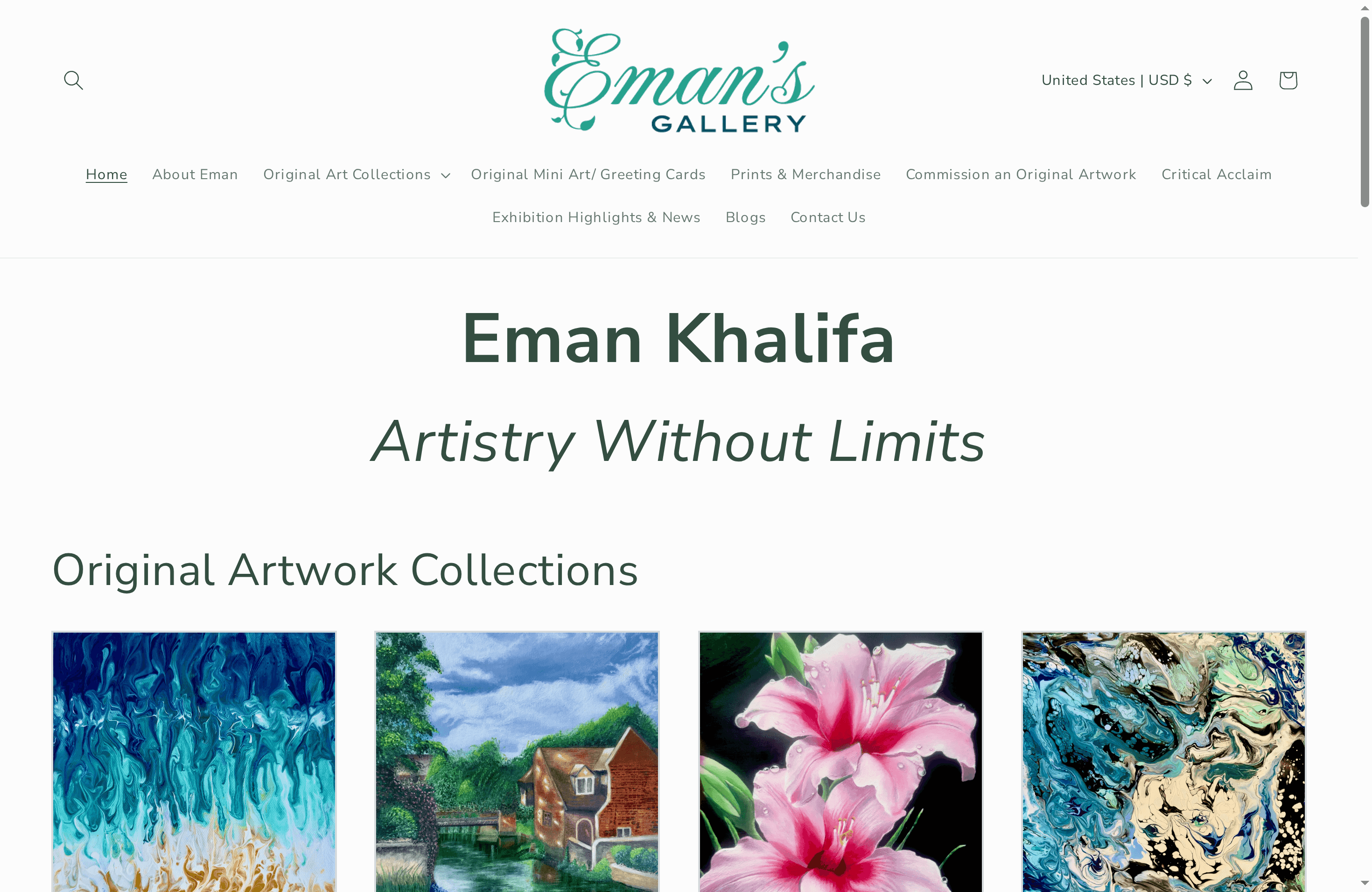
Each original painting is a one-of-a-kind work. Pieces like the fluid blue gold ocean painting Good Tidings and the tonalism moonlit night scene Nocturned show the range of styles available. For collectors who prefer prints, the abstract ink splash canvas print Fragments of Memory and the geometric urban canvas print City in Grids bring the same artistic depth at a different price point. Browse the full wall art prints collection to find the right piece for your space.
FAQ
What is canvas art made of?
Canvas art is made from woven fabric, typically cotton, linen, or a synthetic blend, onto which paint is applied by hand or an image is printed digitally. The fabric’s texture gives canvas art its characteristic visual depth.
What is the difference between a canvas painting and a canvas print?
A canvas painting is an original, hand-painted artwork that is unique. A canvas print is a digital reproduction of an image printed onto canvas fabric, allowing multiple identical copies to be produced at a lower cost.
How long does canvas art last?
High-quality canvas prints using archival pigment inks can last up to 75 years with proper care. Original canvas paintings on linen or heavyweight cotton can last centuries when stored and displayed correctly.
Is canvas art expensive?
The cost of canvas art varies widely. Quality canvas and printing techniques influence price, with premium cotton canvas and inkjet printing leading to higher costs. Entry-level canvas posters are affordable, while original paintings represent a higher investment with lasting value.
How do I care for canvas art at home?
Dust canvas art regularly with a soft, dry microfiber cloth. Keep it away from direct sunlight, high humidity, and heat sources. Never apply water or cleaning sprays directly to the canvas surface.
Stay Connected
- ✨ Explore Eman Khalifa's original art, fine art prints and art-inspired merchandise.
- Follow Eman Khalifa's art journey on: Instagram @emans_gallery and Facebook
- Watch Eman Khalifa creating live art on: YouTube @emans_gallery
