


Abstract Art Examples with Meaning: An Enthusiast's Guide
TL;DR:
- Abstract art communicates emotional and spiritual ideas through shape, color, and form rather than literal imagery.
- Iconic works like Malevich’s Black Square and Kandinsky’s With the Black Arc show that non-representational art carries deep meaning.
Abstract art is a structured visual language that communicates emotional and spiritual ideas through shape, color, and form rather than literal imagery. The most powerful abstract art examples with meaning show that non-representational work is never empty. Kazimir Malevich’s Black Square (1915) and Wassily Kandinsky’s With the Black Arc (1912) prove that a painting without a single recognizable object can carry the weight of a religious icon or a symphony. Understanding these works changes how you see every abstract piece you encounter.
1. What are key abstract art examples with meaning?
Abstract art communicates through a language of shape, color, and line rather than through recognizable subjects. The following iconic works show exactly how that language works in practice.
-
Kazimir Malevich, Black Square (1915). Malevich founded Suprematism on the idea that pure geometric form could carry spiritual weight. A black square on a white canvas sounds minimal. Malevich positioned it at the corner of his exhibition space, the same place Russian Orthodox icons traditionally hung. The Suprematist movement ran from 1915 to 1919 and argued that liberation from objective representation was the highest artistic goal.
-
Wassily Kandinsky, With the Black Arc (1912). Kandinsky orchestrated color contrasts to create spiritual contrast and harmony. Blue suggests inward movement and contemplation. Red signals outward energy and expansion. The black arc cutting through the composition acts as a visual anchor, holding competing forces in tension.
-
Jackson Pollock, Number 7A (1948). Pollock’s all-over composition invites continuous viewer engagement rather than directing the eye to a single focal point. The work records the physical act of painting as a narrative. Every drip and gesture is a visible trace of the artist’s body moving through space.
-
Ilya Bolotowsky, geometric abstractions (mid-20th century). Bolotowsky used vertical and horizontal lines to achieve ideal harmony through controlled tension. His canvases feel balanced rather than static because the lines pull against each other with equal force.
-
Piet Mondrian, neoplasticism works (1920s onward). Mondrian reduced painting to primary colors and straight lines. He believed this formal reduction expressed universal equilibrium, the underlying order beneath visible reality.
2. How color, shape, and form convey meaning
Abstract art relies on six core elements to build meaning: color, shape, form, texture, line, and value. Each element carries its own expressive weight. Learning to read them is the key to understanding any abstract work.
-
Color. Color is the most immediate carrier of emotion in abstract art. Kandinsky mapped color to feeling with unusual precision. Blue signals inward movement and spirituality, while red signals energy and outward expression. Yellow tends toward aggression; green suggests calm.
-
Shape. Geometric shapes carry cultural and psychological associations. Circles suggest wholeness and continuity. Triangles introduce tension and direction. Squares, as Malevich demonstrated, can stand for absolute stillness or the void.
-
Form. Form refers to the three-dimensional quality a shape implies on a flat surface. A rounded form feels soft and organic. A hard-edged form feels constructed and deliberate. Artists use this contrast to shift the emotional register of a composition.
-
Texture. Texture adds a tactile dimension to visual experience. Pollock’s layered drips create a surface that looks physically dense. That density reinforces the sense that the painting records real physical labor.
-
Line. Line controls rhythm and movement. A diagonal line creates energy. A horizontal line creates rest. Mondrian’s strict vertical and horizontal lines were a deliberate choice to express equilibrium rather than dynamism.
-
Value. Value is the range from light to dark. High contrast creates drama and urgency. Low contrast creates atmosphere and quiet. Color field painters like Mark Rothko used subtle value shifts within large color areas to produce a meditative, almost hypnotic effect.
Pro Tip: When you stand in front of an abstract work, close your eyes briefly, then open them and note your first physical sensation before your mind starts analyzing. That immediate response is the painting communicating directly with you.
3. Abstract art styles and their meanings
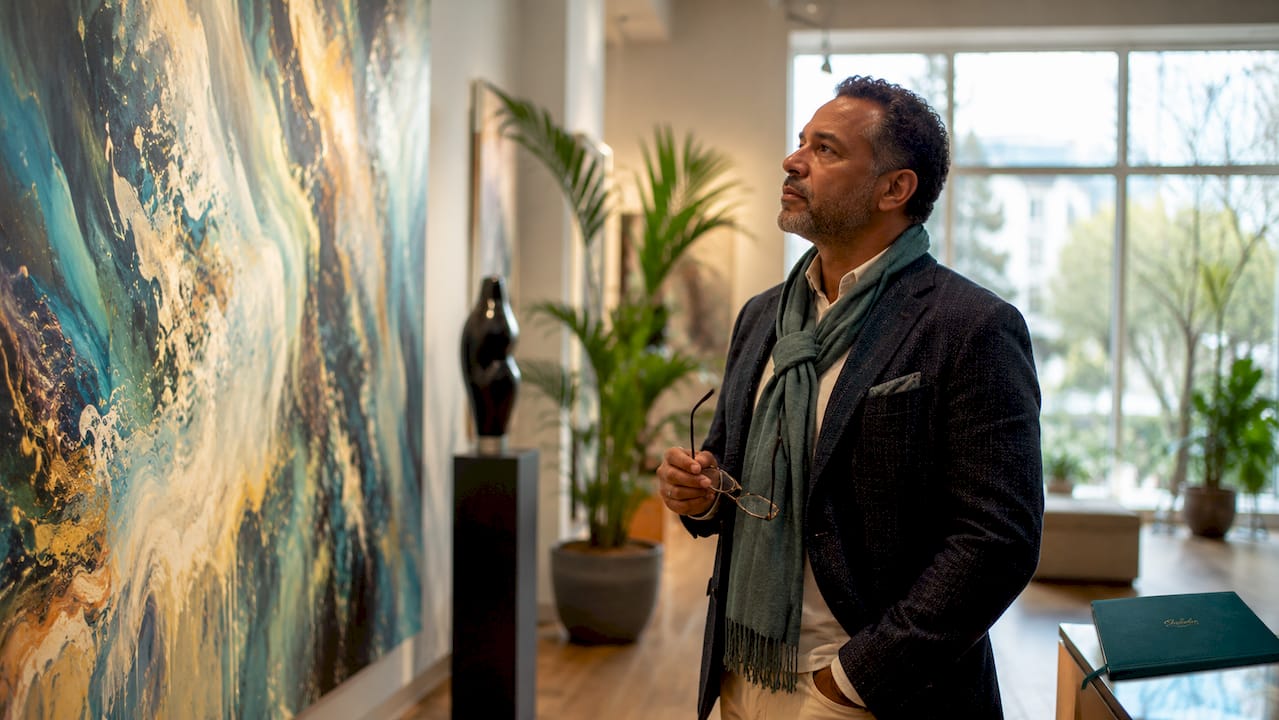
Different abstract art styles approach meaning from distinct angles. The table below maps the major styles to their defining characteristics and emotional intent.
| Style | Defining approach | Emotional or symbolic meaning |
|---|---|---|
| Suprematism | Pure geometric forms, minimal palette | Liberation from the material world; spiritual transcendence |
| Abstract expressionism | Gestural marks, physical process visible | Raw emotion; the act of creation as meaning |
| Geometric abstraction | Precise lines and shapes, controlled composition | Harmony, balance, and universal order |
| Color field painting | Large areas of flat or subtly modulated color | Mood, contemplation, and immersive emotional experience |
| Neoplasticism | Primary colors, vertical and horizontal lines only | Universal equilibrium; reduction to essential truth |
Suprematism and neoplasticism both pursue reduction, but for different reasons. Malevich wanted to reach pure feeling by stripping away the world. Mondrian wanted to reveal the hidden structure beneath the world. Abstract expressionism moves in the opposite direction: it adds rather than removes, piling gesture on gesture until the canvas records a complete emotional event.
Geometric abstraction sits between these poles. It uses precision to express ideas that feel too large for words, harmony, tension, balance, and the relationship between opposing forces. Bolotowsky’s work is a clear example. His paintings feel resolved, not because conflict is absent, but because opposing forces are held in exact equilibrium.
Color field painting, associated with artists like Rothko and Helen Frankenthaler, strips away gesture and replaces it with pure chromatic experience. The meaning lives entirely in how a specific color at a specific scale affects the viewer’s nervous system.
4. How to understand and interpret abstract art
Formal art training can actually hinder intuitive engagement with abstract work. The instinct to find a subject, to ask “what is it?” blocks the direct emotional response the artist intended. Bypassing that instinct is the first practical step toward genuine appreciation.
These approaches work consistently for art enthusiasts at any experience level:
-
Observe before analyzing. Spend the first minute simply looking. Note what colors dominate. Notice whether shapes feel heavy or light, tense or relaxed. Let your body respond before your mind intervenes.
-
Consider the artist’s historical moment. Kandinsky painted With the Black Arc in 1912, as Europe moved toward the First World War. That context does not explain the painting, but it deepens it. Spiritual searching was not abstract for Kandinsky. It was urgent.
-
Practice abstraction yourself. Take a photograph of a familiar object and reduce it to its basic shapes and colors on paper. This exercise, recommended by art educators at the Utah Museum of Fine Arts, makes the process of abstraction concrete. You stop asking what the artist removed and start understanding why.
-
Accept multiple valid readings. A Pollock drip painting does not have one correct interpretation. The artist’s creative impulses are recorded in the marks, but your reading of those marks is also real. Two viewers can stand before the same canvas and have equally valid, completely different experiences.
-
Look for what a good abstract painting does. Strong abstract works create a visual experience that holds your attention and rewards sustained looking. Understanding what makes a painting work gives you a framework for evaluating any piece you encounter.
The most useful shift is moving from “I don’t understand this” to “what am I feeling right now?” That single question opens the work.
Key takeaways
Meaningful abstract art communicates through color, shape, form, texture, line, and value, and the most iconic works prove that non-representational painting carries as much emotional weight as any figurative masterpiece.
| Point | Details |
|---|---|
| Abstract art has structure | It uses six core elements: color, shape, form, texture, line, and value to build meaning. |
| Color carries specific meaning | Blue signals inward movement; red signals outward energy, as Kandinsky demonstrated in 1912. |
| Style shapes intent | Suprematism pursues spiritual liberation; abstract expressionism records the physical act of creation. |
| Intuition beats analysis | Bypassing the search for a subject and observing direct emotional response deepens appreciation. |
| Process is meaning | In abstract expressionism, the visible marks of creation are the content of the work itself. |
Why abstract art hits differently when you stop trying to decode it
The first time I stood in front of a large abstract canvas, I spent most of the time feeling vaguely embarrassed that I could not identify what it depicted. That was the wrong question entirely, and it took me years to understand why.
Abstract art does not ask you to decode it. It asks you to receive it. The moment I stopped searching for a hidden image in Pollock’s layered drips and simply let the scale and density of the surface register physically, the work became genuinely moving. The painting was never withholding meaning. I was blocking it.
What I find most striking about abstract art with deep meaning is how personal the experience remains even across very different viewers. Two people can stand before the same Kandinsky and walk away with completely different emotional memories, both entirely real, both entirely valid. That is not a weakness of the form. It is the point.
The works that stay with me longest are the ones where color and composition create a physical sensation before thought arrives. That gap between sensation and interpretation is where abstract art lives. Closing it too quickly with analysis is the one mistake worth avoiding.
— Eman
Original abstract art worth living with
Abstract art earns its place on a wall when it continues to reward attention over months and years, not just on first viewing.
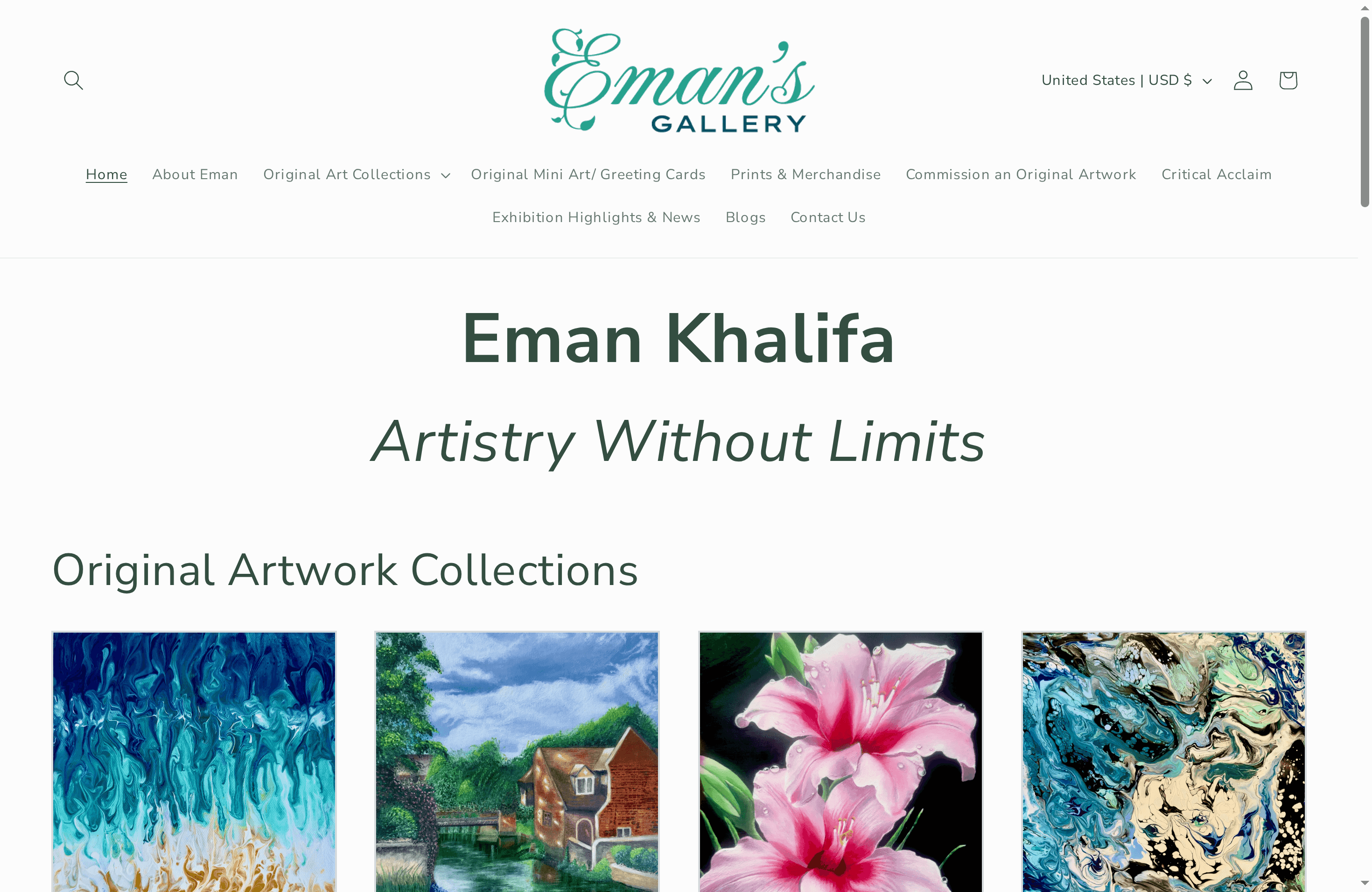
Emansgallery offers original handmade abstract paintings by artist Eman Khalifa, each one a unique work built around color relationships and emotional depth. The Good Tidings original painting uses fluid blue and gold to create the kind of sustained visual experience this article describes. For art enthusiasts who prefer prints, the wall art prints collection brings the same color intensity to museum-quality canvas at accessible price points. Emansgallery ships worldwide from the UK, USA, Canada, Australia, and beyond.
FAQ
What is abstract art with meaning?
Abstract art with meaning uses non-representational elements such as color, shape, and line to communicate emotional, spiritual, or conceptual ideas. Abstract art is a language of visual elements rather than literal imagery.
What are the most famous abstract art pieces?
Kazimir Malevich’s Black Square (1915), Wassily Kandinsky’s With the Black Arc (1912), and Jackson Pollock’s Number 7A (1948) are among the most studied examples of meaningful abstract art.
How do I interpret abstract art?
Observe color, shape, and texture before searching for a subject. Direct emotional engagement with the visual elements produces a more genuine response than technical analysis.
What do colors mean in abstract art?
Color carries specific emotional associations in abstract art. Kandinsky established that blue signals inward movement and spirituality, while red signals energy and outward expression.
What is the difference between abstract art styles?
Suprematism pursues spiritual liberation through pure geometric form. Abstract expressionism records the physical act of creation as meaning. Geometric abstraction uses precise line relationships to express harmony and balance.
Stay Connected
- ✨ Explore Eman Khalifa's original art, fine art prints and art-inspired merchandise.
- Follow Eman Khalifa's art journey on: Instagram @emans_gallery and Facebook
- Watch Eman Khalifa creating live art on: YouTube @emans_gallery
